Cinema e Argumento

Festival de Sundance 2022: “Resurrection”, de Andrew Semans
sundanceresurrection

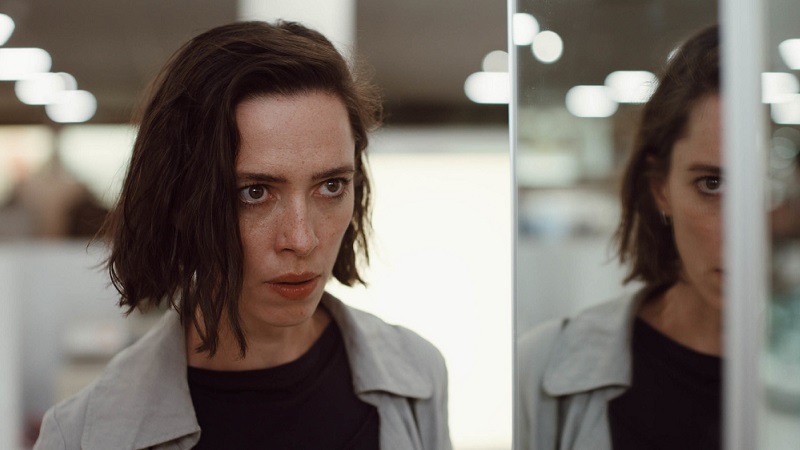
Foi colocando as mulheres no centro de histórias provocadoras que o chamado cinema de gênero alcançou suas melhores notas nos últimos anos e nos proporcionou verdadeiros espetáculos vindos de atrizes para lá de talentosas. Temos como exemplo Toni Collette em Hereditário, Lupita Nyong’o em Nós, Florence Pugh em Midsommar, Elisabeth Moss em O Homem Invisível e, agora, Rebecca Hall em Resurrection,  filme que faz sua estreia no Festival de Sundance. Em que pese minha afinidade (ou falta dela) com cada um desses filmes, todos se utilizaram do suspense, do thriller ou do próprio terror para questionar uma série de costumes e cicatrizes da nossa sociedade, linha também adotada por Resurrection.

O segundo longa de Andrew Semans é mais modesto em termos de produção se comparado aos títulos citados anteriormente, mas jamais se se apequena na construção de seu estilo. Assim como no recente A Filha Perdida — outro projeto que tem a maternidade como matéria-prima para causar determinados incômodos —, Ressurection traz uma mãe em um processo gradativo de desestabilização emocional ao ser confrontada por traumas do passado. A mãe em questão é Margaret (Hall), uma mulher em pleno controle de sua vida que começa a afrouxar e a perder as rédeas quando recebe uma visita de uma figura traumática de tempos passados.

No roteiro também escrito por Semans, acontecimentos indeléveis da juventude de Margaret retornam para tirar do prumo uma mulher hoje estável, pragmática e de ideias firmes. É por vermos a protagonista tão no controle ao longo do primeiro terço que seu posterior descontrole surte tanto efeito. Ainda que as razões demorem a ser reveladas — e que elas carreguem até elementos com traços pouco realistas se analisados com o que foi nos apresentado ou sugerido até ali —, Resurrection se sai admiravelmente bem ao criar atmosfera e curiosidade em torno dos novos comportamentos de Margaret.

Os desafios de interpretar uma personagem como essa sem resvalar em caricaturas ou superficialidades são grandes, e também é preciso colocar na conta de complexidades o entrave entre o racional e o sentimental de uma mulher que, de repente, luta contra seus próprios turbilhões internos para não derrubar as bases sólidas construídas até ali. E Rebecca Hall é espetacular em todas as camadas. Sua presença aqui é forte e de personalidade, assim como cada uma das oscilações trabalhadas em busca de outras facetas da personagem. Em pouco tempo de projeção, fica evidente a garantia de seu lugar em um panteão recente já ocupado por Collette, Nyong’o, Pugh e Moss.

Como o bom filme-evento que tem potencial para ser quando estrear comercialmente, Resurrection é divisivo por apostas em resoluções que exigem do espectador certas afinidades com o estilo das decisões tomadas. Não é e nem quer ser necessariamente conclusivo, mas sim capaz de acentuar questões que, em diferentes níveis, assim como na vida, muitas vezes não se resolvem com as respostas que desejamos. Na busca pelo controle absoluto, a protagonista está em constante estado de alerta e em uma outra sintonia para seguir a vida, o que diz muito sobre fantasmas que o filme explora até o último segundo.

Resurrection review

It was by placing women at the center of provocative stories that the so-called genre cinema reached its highest marks in recent years and provided us with real spectacles coming from talented actresses. We have as an example Toni Collette in Hereditary, Lupita Nyong’o in Us, Florence Pugh in Midsommar, Elisabeth Moss in The Invisible Man and, now, Rebecca Hall in Resurrection, a film that makes its debut at the Sundance Film Festival. Despite my affinity (or lack thereof) with each of these films, they all used suspense, thrillers or terror itself to question a series of habits and scars of our society, a concept also present in Resurrecion.

Andrew Semans’ second feature film is more modest in terms of production compared to the titles mentioned above, but it never dwindles in the construction of its style. As in the recent The Lost Daughter — another project that uses motherhood as a raw material to cause certain discomfort — Ressurection brings a mother into a gradual process of emotional destabilization when confronted by old traumas. The mother in question is Margaret (Hall), a woman in full control of her life who begins to lose control when she receives a visit from a traumatic figure from times past.

In the screenplay also written by Semans, indelible events from Margaret’s youth return to destabilize a woman who is now stable, pragmatic and with firm ideas. It’s because we see the protagonist so in control throughout the first act that her later confusion has such an effect. Although the reasons are slow to be revealed — and they even carry elements with unrealistic traits compared to what has been presented or suggested to us so far — Resurrection does admirably well in creating atmosphere and curiosity around Margaret’s new behaviors.

The challenges of playing a character like this without slipping into caricatures or superficialities are great, and it is also necessary to take into account the complexities of the barrier between the rational and the sentimental of a woman who, suddenly, fights her own internal turmoil in order not to tear down the solid foundations built up to that point. And Rebecca Hall is spectacular on every level. Her presence here is strong, as are each of the oscillations she develops in search of other facets of the character. The guarantee of his place in a recent pantheon already occupied by Collette, Nyong’o, Pugh and Moss is evident.

Like the good event-film that it has the potential to be when it debuts commercially, Resurrection is divisive by betting on resolutions that demand certain affinities from the viewer. It is not and does not want to be necessarily conclusive, but rather capable of highlighting issues that, at different levels, as in life, are often not resolved with the answers we want. In the search for absolute control, the protagonist is in a constant state of alert and in another tune to move on with life, which says a lot about ghosts that the film explores until the last second.

Festival de Sundance 2022: “A Love Song”, de Max Walker-Silverman

sundancelsong

As cores e os tons escolhidos pelo diretor de fotografia Alfonso Herrera Salcedo para A Love Song dizem muito sobre este primeiro longa de Max Walker-Silverman. É como se estivéssemos diante de um envelhecido cartão-postal, carregado de histórias, lembranças e saudades. E também temos frases breves, todas suficientes para entendermos que nem sempre é preciso nome às coisas e que determinados sentimentos podem ser autoexplicativos.

Não precisamos saber a história de Faye (Dale Dickey) tintim por tintim, e talvez o que a defina seja essa ideia de que a solidão não se restringe sofrimento: ela também pode ser sobre autoconhecimento, introspecção e consciência. Estacionada nas montanhas do Colorado, nos Estados Unidos, Faye espera. Não sabemos quem nem quando essa pessoa chegará, e tal espera é o suficiente para conhecermos uma personagem envolta em melancolia.

A comparação com Nomadland é inevitável — Faye está sozinha na estrada, morando em um trailer e com uma vida deixada para trás —, mas A Love Song tem suas próprias ideias. Aqui, temos a protagonista parada em um único lugar, vivendo uma espera que a define em muitos sentidos. Faye carrega muito pouco: um livro sobre estrelas, outro sobre pássaros, e um pequeno rádio que sintetiza sua única conexão com o mundo mesmo estando em 2020. Os detalhes a explicam, e tudo muda quando sua espera finalmente termina.

Um filme como A Love Song poderia cair no completo marasmo se construísse tal atmosfera sem uma atriz que pudesse capturar a imensidão não verbalizada. E Max Walker-Silverman acertou em cheio ao chamar uma atriz como Dale Dickey para o papel. Eterna coadjuvante de filmes como Inverno da Alma e A Qualquer Custo, Dale tem aquele tipo de rosto que carrega o mapa de uma vida e que, somente em uma primeira aparição, já nos faz compreender a mulher solitária e de poucas palavras que estamos prestes a acompanhar.

Dale tem mais de 130 trabalhos no currículo e poucas vezes recebeu um papel rico como esse. Ela é espetacular em cada inflexão de voz e em cada olhar que marca sua espera. A dinâmica que ela estabelece com o também sensível Wes Studi é preciosa porque enternece uma importante quebra de expectativa: o encontro vivido por ambos não é sobre revelações ou acertos de contas, mas sim sobre duas pessoas que se (re)conhecem em sentimentos compartilhados de perda, saudade e reconstrução.

Eventualmente, é possível nomear as reflexões propostas roteiro — viuvez, amores perdidos, envelhecimento, memória —, mas as preciosidades de A Love Song estão no plano do abstrato. Em seu primeiro trabalho como diretor de longas-metragens, Max Walker-Silverman demonstra grande sensibilidade, um delicado apreço por interpretações e o raro talento de condensar uma gama de sentimentos em um pequeno recorte de tempo e espaço.

A Love Song review

The color palette chosen by cinematographer Alfonso Herrera Salcedo for A Love Song says a lot about this first feature by Max Walker-Silverman. It is as if we were in front of an aged postcard, full of stories, memories and homesickness. And we also have brief sentences throughout the film, all of which are enough for us to understand that things don’t always need to be named and that certain feelings can be self-explanatory.

We don’t need to know Faye’s (Dale Dickey) story in detail, and perhaps what defines it is this idea that loneliness isn’t just about suffering: it can also be about self-knowledge, introspection and awareness. Parked in the mountains of Colorado, United States, Faye waits. We don’t know who or when that person will arrive, and such a wait is enough for us to meet a character shrouded in melancholy.

The comparison to Nomadland is unavoidable — Faye is alone on the road, living in a trailer and with a life left behind — but A Love Song has her own ideas. Here, we have the protagonist standing in one place, living a wait that defines her in many ways. Faye carries very little: a book about stars, another about birds, and a tiny radio that epitomizes her only connection to the world even though it’s 2020. The details explain her, and everything changes when her wait is finally over.

A film like A Love Song could fall into complete stagnation if it built such an atmosphere without an actress who could capture an unspoken immensity. And Max Walker-Silverman nailed it when casting an actress like Dale Dickey in the role. Supporting actress in films like Winter’s Bone and Hell or High Water, Dale has that kind of face that carries the map of a life and that, in just a first appearance, makes us understand this lonely woman of few words.

Dale has over 130 projects in her filmography and has rarely been given a complex role like this. She is spectacular in every inflection of voice and in every look. The dynamic she establishes with the also sensitive Wes Studi is precious because it softens an important break in expectation: the encounter experienced by both is not about revelations or resolutions, but about two people who recognize each other in shared feelings of loss, longing and reconstruction.

Eventually, it is possible to name the reflections proposed in the script — widowhood, lost loves, aging, memory — but the gems of A Love Song are in the abstract plane. In his first work as a feature film director, Max Walker-Silverman demonstrates great sensitivity, a delicate appreciation for acting and the rare talent for condensing a range of feelings into a small circle of time and space.

Festival de Sundance 2022: “The Princess”, de Ed Perkins

sundancetprincess

De tempos em tempos, figuras da vida real se tornam objeto de paixões repentinas entre filmes e seriados. O escritor Truman Capote, por exemplo, foi retratado por dois filmes consecutivos em 2005 e 2006 com Capote e Confidencial, enquanto o pintor Vincent Van Gogh apareceu recentemente na animação Com Amor, Van Gogh e no drama No Portal da Eternidade, também apresentados em dois anos consecutivos. Já a cantora Aretha Franklin agora tem sua história celebrada pela minissérie Genius: Aretha e pelo filme Respect. Mas ainda está por vir um fenômeno tão simultâneo quanto o da princesa Diana. Depois de ter sido encarnada por Kristen Stewart em Spencer e por Emma Corrin no seriado The Crown, Diana ainda ganhará vida com Elizabeth Debicki em uma nova temporada dessa produção original Netflix.

É por isso que suspeitei quando descobri The Princess, documentário de Ed Perkins que faz sua estreia no Festival de Sundance deste ano. Minha suspeita é muito simples: afinal, depois de tudo o que vimos sobre Diana nos últimos anos, ainda há algo de novo a ser dito sobre sua história? Em teoria, o longa aposta que sim. Na prática, entretanto, a promessa não se cumpre e as boas ideias são desperdiçadas. Perkins, que recebeu uma indicação ao Oscar em 2019 pelo documentário de curta-metragem Ovelhas Negras, disse, na apresentação do filme no festival, que sabe o quanto a história de Diana já foi amplamente abordada, mas que, com The Princess, esperava dar um enfoque diferenciado a essa história que, segundo ele, é uma das que mais definem a nossa era. 

O ponto de partida adotado por Perkins é interessante: o de apresentar uma das figuras mais influentes e icônicas do século XX utilizando apenas imagens de acervo, formando um mosaico de como o trabalho da imprensa e a superexposição a qual Diana foi submetida contribuiu para o seu trágico e conhecido desfecho em agosto de 1997. Na arrancada, o conceito funciona: com tantas imagens de jornalistas registrando cada aparição de Diana em qualquer lugar do mundo, somos tomados por um crescente sentimento de angústia porque, mesmo depois de mais duas décadas e com as redes sociais já sendo parte indissociável da nossa realidade, ainda parece absurdo que uma vida seja exposta de maneira tão cruel e sem escrúpulos.

A montagem de Daniel Lapira e Jinx Godfrey é habilidosa no entrelaçamento das imagens e, principalmente, na transição de fatos importantes da vida de Diana. Acontece que logo The Princess vai perdendo tração devido a um problema fácil de antever e que o documentário não contorna: o de que já vimos uma imensa parte daquelas imagens ao longo dos anos. Diana foi uma figura tão explorada e discutida que é difícil encontrar imagens públicas que não sejam familiares ao público, sensação agravada quando não há qualquer outro artifício para enriquecê-las, como é o caso aqui. Daí vem a frustração de constatar que The Princess pode até ser um excelente trabalho de pesquisa, mas que, como cinema, especialmente agora, tem pouco a acrescentar sobre uma figura tão icônica dos nossos tempos.

The Princess review

From time to time, real-life figures become the object of sudden passions in movies and TV shows. Writer Truman Capote, for example, was portrayed in two consecutive films in 2005 and 2006 with Capote and Confidential, while painter Vincent Van Gogh recently appeared in the animation With Love, Van Gogh and in the drama At Eternity’s Gate, also presented in two consecutive years. Singer Aretha Franklin now has her story celebrated by the miniseries Genius: Aretha and the movie Respect. But a phenomenon as simultaneous as that of Princess Diana is yet to come. After being played by Kristen Stewart in Spencer and by Emma Corrin in the series The Crown, Diana will still come to life with Elizabeth Debicki in a new season of the original Netflix production.

That’s why I got suspicious when I heard about The Princess, Ed Perkins’ documentary making its debut at this year’s Sundance Film Festival. My suspicion is very simple: after all, after everything we’ve seen about Diana in recent years, is there still anything new to be said about her story? In theory, The Princess bets so. Practically speaking, however, the promise is not kept and good ideas are wasted. Perkins, who received an Oscar nomination in 2019 for the short-film documentary Black Sheep, said, at the film’s presentation at the festival, that he knows how widely Diana’s story has already been covered, but that he hoped to give a different focus to a life that, according to him, is one of the most defining of our era.

The starting point is quite interesting: to present one of the most influential and iconic figures of the 20th century using only collection images, forming a mosaic of how the work of the press and the overexposure to which Diana was subjected contributed to her tragic and well-known outcome in August 1997. The concept works in the first moments: with so many images of journalists recording each appearance of Diana, we are taken by a growing feeling of anguish because, even after more than two decades and with social networks already being an inseparable part from our reality, it still seems absurd that a life is exposed in such a cruel and unscrupulous way.

The editing by Daniel Lapira and Jinx Godfrey is skillful in the intertwining of images and, above all, in the transition of important facts in Diana’s life. It turns out that soon The Princess loses traction due to the problem that we’ve already seen a huge part of those images over the years. Diana was such a explored and discussed figure that it is difficult to find public images that are not familiar to the audience, a feeling that is exacerbated when there is no other tool to enrich them, as is the case here. Hence the frustration of realizing that The Princess may even be an excellent work of research, but that, as a cinema, especially now, it has little to add about such an iconic figure of our times.

Festival de Sundance 2022: “Good Luck to You, Leo Grande”, de Sophie Hyde

gluckmovie

Passei a pensar muito mais sobre envelhecer desde que conheci a obra da pesquisadora e antropóloga Mirian Goldenberg em um trabalho que realizamos juntos no ano passado. Mirian é a maior ativista pela ideia de uma bela velhice que temos, e a missão diária abraçada por ela para quebrar todos os tabus e preconceitos envolvendo o envelhecimento deveria ser uma bandeira de todos. Trago-a como contextualização porque Good Luck to You, Leo Grande é, de certo jeito, a adaptação cinematográfica de tudo o que Mirian vem questionando ao longo dos anos, inclusive a mesma naturalidade, transparência e delicadeza.

Neste filme estrelado por Emma Thompson, conhecemos Nancy Stokes, uma mulher que está prestes a receber a visita de um garoto de programa depois de dias, meses e até anos pensando na ideia de chamá-lo. O filme se desenrola não apenas a partir desse encontro, mas de quatro que Nancy terá com o jovem Leo (Daryl McCormack). Nem tudo, entretanto, é simples. Muito pelo contrário. Professora aposentada de educação religiosa, Nancy perdeu o marido com quem estava casada há 31 anos e tem plena consciência de que, ao longo da vida, nunca soube o que era sexo de verdade. Sexo bom, muito menos.

Nem preciso entrar em detalhes sobre a importância de um filme como esse ser escrito e dirigido por mulheres como de fato o é, mas vale reforçar que somente com essa composição ele teria tamanha sensibilidade. Como roteirista, Katy Brand usa a história de Nancy para falar sobre a história de muitas como ela. Mulheres que se casaram cedo demais e só tiveram um homem na vida. Esposas que viveram uma vida de sexo protocolar e sem orgasmos. Figuras femininas que não aprenderam a admirar seu próprio corpo — e pior: sempre estiveram inclinadas a depreciá-lo. No mundo delas, vaidade nunca foi uma qualidade, mas sim um julgamento.

Desde o início, é possível deduzir todo o desenrolar de Good Luck to You, Leo Grande, algo que o roteiro não faz questão de esconder. E isso não diminui o bonito arco dramático de Nancy, uma mulher insegura, impaciente e nervosa que, a cada novo encontro com Leo, passa a compreender coisas que ela nunca imaginou poder compreender. Vê-la confessando que nunca bebeu demais, viveu uma aventura, deixou de atender um telefonema de quem quer que fosse e ou deixou de considerar os filhos um fardo depois de adultos confirma que o filme é um retrato fiel do que a sociedade injustamente impõe às mulheres, ainda mais na terceira idade, quando a liberdade ainda segue sendo um elemento desconhecido.

É fácil dar um desconto para eventuais previsibilidades de Good Luck to You, Leo Grande porque a diretora Sophie Hyde não tenta fazer do longa mais do que ele realmente é. O exercício de Sophie é dar graça e verossimilhança a um filme passado em um único cenário e com apenas dois atores. E ela se sai bem especialmente em função da presença de uma grande atriz como Emma Thomspon, totalmente entregue ao papel. Seu talento de sempre está ali, em uma performance também sem qualquer tabu. Há um momento em que Emma, aos 62 anos de idade, literalmente se despe para observar em detalhes seu corpo nu frente a um espelho, aceitando-o como ele é. Não vejo melhor momento para imaginar o quanto esse projeto faz sentido para Emma e o quanto ele também fará para tantas outras mulheres mundo afora.

Good Luck to You, Leo Grande review

I started to think a lot more about aging since I got to know the work of brazilian researcher and anthropologist Mirian Goldenberg. Mirian is the biggest activist for the idea of ​​a beautiful aging that we have, and the daily mission embraced by her to break all the taboos and prejudices surrounding aging should be a flag for everyone. I bring it as contextualization because Good Luck to You, Leo Grande is, in a way, the film adaptation of everything Mirian has been questioning over the years, even with the same naturalness, transparency and delicacy.

In this film starring Emma Thompson, we meet Nancy Stokes, a woman who is about to receive a visit from a male escort after days, months and even years of thinking about the idea of ​​calling him. The film unfolds not just from that encounter, but from four encounters that Nancy will have with young Leo (Daryl McCormack). Not everything, however, is simple. Quite the opposite. A retired teacher of religious education, Nancy lost her husband to whom she had been married for 31 years and is fully aware that throughout her life she never knew what real sex was, let alone good sex.

I don’t even need to go into details about the importance of a film like this being written and directed by women as it actually is, but it’s worth emphasizing that only with this composition the result would have such sensitivity. As a screenwriter, Katy Brand uses Nancy’s story to talk about the story of many women like her. Women who got married too soon and only had one man in their lives. Wives who lived a life of protocol sex and no orgasms. Female figures who haven’t learned to admire their own body — and worse, have always been inclined to despise it. A world where vanity was never a quality, but a judgment.

It is possible to deduce from the beginning the entire unfolding of Good Luck to You, Leo Grande, something that the script does not insist on hiding and does not impact the beautiful dramatic arc of Nancy, an insecure, impatient and nervous woman who, with each new encounter with Leo, begins to understand things she never thought she could understand. Seeing her confessing that she never drank too much, had an adventure or didn’t answer a phone call from their children confirms that the film is an accurate portrayal of what society unfairly imposes on women, specially in the third age, when freedom still remains an unknown element.

The eventual predictability of Good Luck to You, Leo Grande is not a problem because director Sophie Hyde doesn’t try to make the film more than it really is. Sophie’s exercise is to give grace and verisimilitude to a film set in a single room and with only two actors. And she does well mainly due to the presence of a great actress like Emma Thomspon, totally dedicated to the role. His usual talent is there, in a performance also without any taboo. There is a moment when 62-year-old Emma literally undresses to look at her naked body in front of a mirror, accepting it for what it is. I can’t think of a better time to imagine how much sense this project makes for Emma and how much it will do for so many other women around the world.

Festival de Sundance 2022: “Fire of Love”, de Sara Dosa

fireoflovemovie

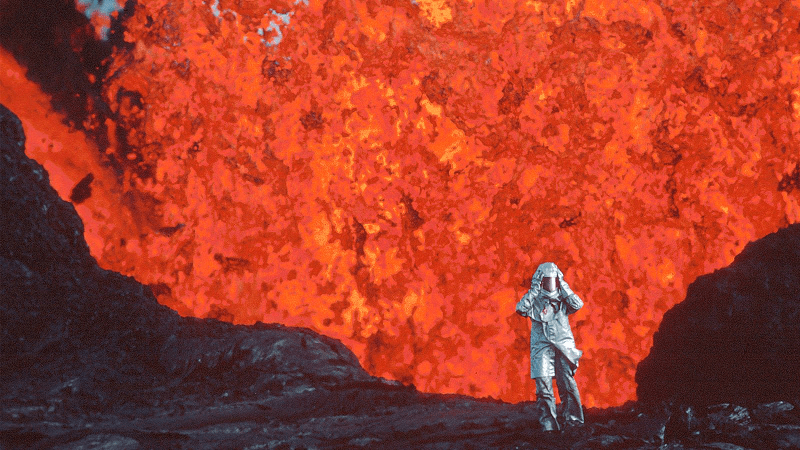
Parece estranho o que vou dizer a seguir, mas há algo de muito belo na morte de Katia e Maurice Krafft no monte japonês Unzen em 1991. Estranho porque, observando de forma isolada, as condições da morte são inimagináveis: Katia e Maurice foram pegos de surpresa pelo chamado fluxo piroclástico de uma erupção vulcânica. Em linhas gerais, significa que ambos forma atingidos por fluidos de até 160 quilômetros por hora, compostos de gás quente e com uma temperatura entre 100 e 500 graus celsius. E o que há de belo nisso? Simples: Katia e Maurice sempre souberam que esse poderia o seu derradeiro fim — ou, quem sabe, o único destino possível e aceitável?

Recusando ser um mero documentário sobre a exploração de vulcões, Fire of Love compila imagens extraordinárias de ambiciosas expedições tendo como linha condutora a vida do casal. Mais do que uma talentosa dupla de trabalho, eles eram ligados pela obsessão em comum por vulcões, e não só do ponto de vista científico, mas também existencial: em inúmeras passagens, a diretora Sara Dosa recupera entrevistas e registros em que Katia e Maurice refletiam, por exemplo, sobre a ambição do homem diante da natureza, o poder da curiosidade diante do medo e a consciente decisão de ter uma vida curta e intensa ao invés de uma longa e banal.

Os dois tinham estilos profissionais muito distintos (ela era afeita aos detalhes, ele às grandes paisagens; ela fazia o trabalho de bastidores, ele as palestras e entrevistas), mas ambos não tinham escolha: as visões compartilhadas sobre o mundo e os vulcões eram tão únicas e intensas que esse encontro só poderia resultar em um relacionamento íntimo em um universo muito particular. São dois pesquisadores que literalmente estavam cientes de que poderiam morrer a qualquer momento, o que não era motivo de preocupação. Pelo contrário: era dessa adrenalina que eles se alimentavam e encontravam uma razão para viver.

Fire of Love é inteiramente feito de imagens registradas pelo casal em suas expedições, com acréscimos de um vasto acervo de entrevistas na TV. Trabalhar apenas com essas imagens, sem recorrer a depoimentos de pessoas que conheceram Katia e Maurice ou de vulcanologistas sobre o legado do trabalho realizado por eles, é um conceito dos mais acertados, pois traz uma atmosfera melancólica para a proposta do documentário de explorar uma vida compartilhada em circunstâncias tão extraordinárias. E não se trata de um acervo qualquer: os extensos registros feitos pela dupla são de tirar o fôlego, tanto pelas grandiosidades vulcânicas quanto pela natural intimidade entre os dois.

Documentarista de mão cheia, Sara Dosa já realizou quase 20 documentários como produtora, e Fire of Love é somente o seu quarto como diretora. Do que viu atuando nos bastidores de filmes como os brasileiros Elena e Democracia em Vertigem, e estando próxima do universo de Al Gore em Uma Verdade Mais Inconveniente e de Michelle Obama em Minha História, Sara parece ter se tornado afeita a essa relação entre o íntimo e o mundo à volta, levantando também questões importantes sobre esse binômio em Fire of Love, como o momento em que Katia começa a passar por dilemas morais ao testemunhar cidades devastadas e milhares de vidas perdidas em função das erupções que tanto admira.

Em certa altura, Maurice diz ter a impressão de já ter vivido cem anos ao fazer um retrospecto de tudo o que viu na vida. Essa afirmação ganha importante significado ao estar mais ao final do longa porque, após também termos entrado em contato com um pouco do que os dois viram, ela realmente faz grande sentido. O que se leva de Fire of Love é um bonito relato sobre duas pessoas que tiveram a oportunidade de viver como bem entenderam e que, por felicidade do destino, acabaram se encontrando em uma paixão intensa e por muitas vezes incompreendida. Antes vistos como um legado histórico e científico, seus materiais agora se eternizam como o merecido registro de um amor pleno.

Fire of Love review

It may seem strange what I am going to say next, but there is something very beautiful about the death of Katia and Maurice Krafft on the Japanese mountain Unzen in 1991. It is strange because the conditions of death are unimaginable: Katia and Maurice were taken by surprise by the so-called flow pyroclastic from a volcanic eruption. In general terms, it means that both were hit by fluids of up to 160 kilometers per hour, composed of hot gas and with a temperature between 100 and 500 degrees celsius. And what’s so beautiful about that? Well, Katia and Maurice always knew that this could be their ultimate end—or, who knows, their only possible and acceptable fate?

Refusing to be a mere documentary about the exploration of volcanoes, Fire of Love compiles extraordinary images of ambitious expeditions based on the couple’s life. More than a talented working duo, they were linked by the common obsession with volcanoes, and not only from a scientific point of view, but also from an existential one: in countless passages, director Sara Dosa compiles interviews and records in which Katia and Maurice talk, for example, about human ambition towards nature, the power of curiosity in the face of fear and the conscious decision to live a short and intense life instead of a long and banal one.

The two had very different professional styles (she was fond of the details, he of the great landscapes; she did the behind the scenes, he did the talks and interviews), but they both had no choice: their shared views on the world and volcanoes were so unique. and intense that this encounter could only result in an intimate relationship with a very particular universe. These are two researchers who were literally aware that they could die at any moment, which was no cause for concern. On the contrary: it was from this adrenaline that they fed and found a reason to live.

Fire of Love is made entirely of images recorded by the couple on their expeditions, in addition to a vast collection of TV interviews. Working only with these images, without resorting to testimonies from people who knew Katia and Maurice or from volcanologists about the legacy of their work, the concept proves to be one of the most successful, as it brings a melancholy atmosphere to the documentary’s proposal of exploring a life shared in such extraordinary circumstances. And it is not just any collection: the extensive records made by the duo are breathtaking, both for the volcanic grandeur and for the natural intimacy between the two researchers.

A prolific filmmaker, Sara Dosa has made nearly 20 documentaries as a producer, and Fire of Love is only her fourth as a director. From what she saw working behind the scenes in films such as the Brazilian films Elena and The Edge of Democracy, and being close to the universe of Al Gore An Inconvenient Sequel: Truth to Power and Michelle Obama in Becoming, Sara seems to have embraced this relationship between the intimate and the world around, also raising important questions about this binomial in Fire of Love, such as the moment when Katia begins to go through moral dilemmas when witnessing devastated cities and thousands of lives lost due to the eruptions she so admires.

At one point, Maurice says he has the impression that he has already lived a hundred years when he looks back on everything he has seen in his life. This statement gains important meaning when it is closer to the end of the film because, after we also got in touch with a little bit of what the two saw, it really makes a lot of sense. Fire of Love is a beautiful story about two people who had the opportunity to live as they pleased and who, by the happiness of fate, ended up finding themselves in an intense and often misunderstood passion. Once a historical and scientific legacy, his records are now immortalized as the delicate portrait of a great love.