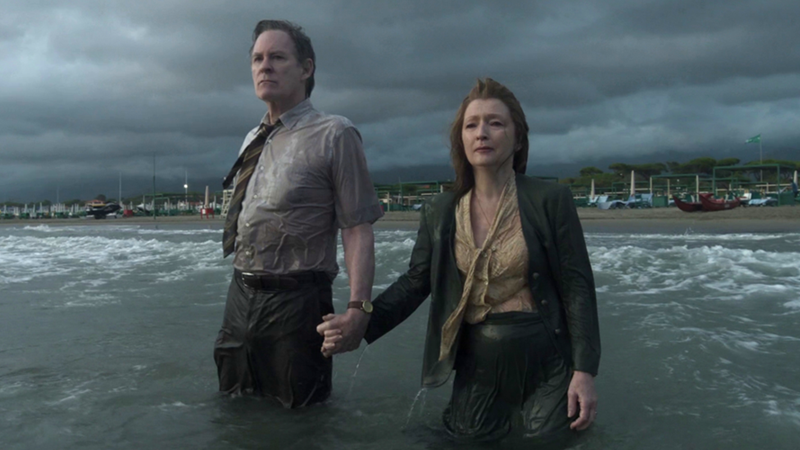
Trançando literatura com audiovisual, o mexicano Alfonso Cuarón escreveu e dirigiu todos os episódios da minissérie Disclaimer com certo apavoramento — afinal, quando recebeu o convite da Apple TV para comandar esse projeto, o cineasta deixou muito claro que não sabia dirigir séries e trabalharia a adaptação do livro homônimo de René Knight com a mesma lógica de um longa-metragem. É um tipo de abordagem que traz complicações, visto, por exemplo, Crisis in Six Scenes, série dirigida por Woody Allen para o Prime Video que ele próprio diz ter sido uma das experiências mais traumáticas da sua carreira. Não por acaso, ninguém assistiu — e o resultado foi solenemente ignorado até por críticos e premiações.
Embarquei em Disclaimer, portanto, com grande receio. Seria Cuarón capaz de não fazer apenas um longa-metragem visivelmente picotado em sete partes? Conseguiria ele trazer uma atmosfera seriada para a história, sem deixar os episódios indistinguíveis entre si? Pois o diretor é exitoso nesse desafio lançado a si próprio, a começar pela decisão de absorver bastante da essência literária da trama para transportá-la ao seu sempre admirável esmero técnico como realizador. O que quero dizer com isso é que, entre outras coisas, Disclaimer conta sua história a partir de múltiplas vozes que ganham vida nas narrações em off. Isso evoca tanto a amplitude com que a narrativa literária destrincha entrelinhas para desenvolver personagens quanto ao ritmo particular de uma obra escrita.
Não há, contudo, obviedades no uso das narrações. Pelo contrário, há personalidade, como acontece com o Stephen Bridgestocke de Kevin Kline, que desafia constantemente o espectador com as suas observações ácidas e sem amarras, ainda mais quando o alvo em questão é toda a família da jornalista Catherine Ravenscroft (Cate Blanchett). Ao se utilizar das melhores ferramentas de um exercício literário, Cuarón termina por driblar o seu pavor de não dominar uma narrativa seriada. Ainda que alguns episódios sejam melhor lapidados do que outros em termos de estrutura, existe raciocínio interno em cada um deles. Não é como se eles ficassem incompletos quando vistos de forma independente – e, quando porventura ficam, é porque deixam instigantes ganchos para os próximos capítulos, algo sempre bem-vindo em séries.
Sem pressa alguma, Disclaimer vai revelando as peças de um quebra-cabeça cujo grande conflito se concentra no pânico de Catherine ao receber um livro que estaria revelando erros gravíssimos de seu passado — erros esses que ela sempre tentou guardar a sete chaves, inclusive da sua própria família. Há um quê de Animais Noturnos na proposta, mas as semelhanças param por aí. Disclaimer, intitulada no Brasil como Difamação, reencenará passagens do livro em questão ao mesmo tempo em que criará uma ciranda de (re)ações acerca do passado da protagonista. Se a famosa lei do retorno dá conta de nos devolver tudo o que entregamos ao universo, sejam elas coisas boas ou ruins, a minissérie não se atém apenas a isso: até o último episódio, o roteiro será prismático e questionará como cada um impõe as suas verdades e faz os seus próprios julgamentos, incluindo nós, espectadores.
Tento ser o mais subjetivo possível sobre a trama porque ultrapassar essa fronteira é entregar boa parte das maneiras com que ela avança e recompensa. O público feminino, em particular, terá boas análises para fazer do conjunto final. Ainda assim, sem revelar detalhes e o desfecho, sobram outros elogios que eu não poderia deixar de registrar, todos em dose dupla: para Emmanuel Lubezki e Bruno Delbonell, que fotografam uma Londres cinzenta e uma Itália ensolarada como poucos; para Finneas O’Connell e o Atticus Quartet, que, nessa ordem, compõem e performam a sublime trilha sonora; e, claro, para Cate Blanchett, mas, especificamente, para Kevin Kline, que há muito tempo não recebia um papel à altura de seus repertório e que, por diversos momentos, me lembrou a Barbara Covett de Judi Dench em Notas Sobre Um Escândalo. Um time ímpar a serviço de uma das melhores minisséries do ano.
DISCLAIMER REVIEW
Weaving literature with audiovisual storytelling, Mexican filmmaker Alfonso Cuarón (Y Tu Mamá También, Gravity, Roma) wrote and directed all episodes of the miniseries Disclaimer with a certain apprehension. After all, when he was invited by Apple TV to lead this project, the filmmaker made it very clear that he didn’t know how to direct a series and would approach the adaptation of René Knight’s book with the logic of a feature film. This kind of approach can lead to complications, as seen with Crisis in Six Scenes, a series directed by Woody Allen for Prime Video, which he himself described as one of the most traumatic experiences of his career. Unsurprisingly, it went unwatched and was solemnly ignored even by critics and awards.
I embarked on Disclaimer, then, with significant trepidation. Could Cuarón avoid simply creating a feature film awkwardly chopped into seven parts? Would he manage to infuse a serialized atmosphere into the story, ensuring the episodes were distinct from one another? To my relief, the director rises to the challenge he set for himself, starting with the decision to absorb much of the literary essence of the plot and translate it into his always admirable technical finesse as a filmmaker. By this, I mean that Disclaimer tells its story through multiple voices that come to life via voiceovers. This captures not only the breadth with which a literary narrative dissects nuances to develop characters but also the distinctive rhythm of a written work.
However, there’s nothing obvious about how the voiceovers are used. On the contrary, they’re brimming with personality, as seen with Kevin Kline’s Stephen Bridgestocke, who constantly challenges the audience with his sharp and unfiltered observations, especially when directed at journalist Catherine Ravenscroft (Cate Blanchett) and her family. By employing the best tools of literary storytelling, Cuarón ultimately overcomes his fear of not mastering a serialized narrative. While some episodes are more polished than others structurally, there’s a deliberate thought process behind each of them. They don’t feel incomplete when viewed individually – and when they occasionally do, it’s because they leave intriguing cliffhangers for the next chapter, something always welcome in a series.
Without any rush, Disclaimer gradually unveils the pieces of a puzzle whose central conflict revolves around Catherine’s panic upon receiving a book that exposes grave mistakes from her past – secrets she has tried to keep hidden even from her own family. There’s a hint of Nocturnal Animals in the premise, but the similarities end there. Disclaimer, titled Difamação [Defamation] in Brazil, re-enacts scenes from the book while creating a complex dance of actions and reactions tied to the protagonist’s past. If the famous “law of return” ensures that we reap what we sow – good or bad – the miniseries doesn’t stop at that. By the final episode, the script becomes prismatic, questioning how everyone imposes their truths and passes judgment, including us, the viewers.
I strive to remain as subjective as possible about the plot because crossing that boundary would reveal too much about how it unfolds and rewards its audience. Female viewers, in particular, will have rich analyses to draw from the overall narrative. Even so, without revealing details or the ending, there are other praises I must highlight – each deserving double recognition: for Emmanuel Lubezki and Bruno Delbonell, who capture a gray London and a sunlit Italy like few can; for Finneas O’Connell and the Atticus Quartet, who, respectively, compose and perform the sublime score; and, of course, for Cate Blanchett but especially for Kevin Kline, who hasn’t had a role worthy of his repertoire in years. At times, Kline even reminded me of Judi Dench’s Barbara Covett in Notes on a Scandal. An unparalleled team serving one of the best miniseries of the year.
 Cinema e Argumento